0
0 item
View CartYour cart is empty
MON - FRI 10:00 AM - 06:00 PM EST.
SAT - SUN holiday

Botulinum toxin (type A) injections have become a staple in modern aesthetics, transforming the way medical professionals approach facial rejuvenation. Whether it’s smoothing fine lines, lifting brows, or treating hyperhidrosis, the demand for botulinum neurotoxins has never been higher. But with so many brands on the market, which ones truly stand out in 2026? In this article, we’ll break down the top botulinum toxin brands, compare their unique features, and help practitioners make informed choices. To make things even easier, we’ve included a detailed comparison summarizing the key differences between the products.
“The botulinum toxin landscape has never been more dynamic,” observes Dr. Jennifer Martinez, a board-certified dermatologist with over 20 years of aesthetic experience. “We’re witnessing a fascinating convergence of established Western brands with proven track records and innovative Korean manufacturers offering exceptional quality at competitive prices. This gives practitioners unprecedented flexibility to match products with specific patient needs and clinic business models.”
The botulinum toxin (type A) market is evolving at a rapid pace. While traditional household names like Botox and Dysport continue to dominate, new players – particularly from Korea – are gaining attention for their high quality, affordability, and innovative formulations. Medical professionals today are no longer restricted to legacy brands. Korean brands, in particular, are becoming increasingly popular worldwide, offering excellent safety profiles and consistent results.
Despite this, many practitioners still trust the long-standing reputations of established Western brands. This trust is built on decades of research, proven clinical outcomes, and global recognition. The result? A dynamic marketplace where both classic and emerging brands coexist, giving medical professionals more choices than ever before.
Dr. Michael Chen, a cosmetic physician specializing in injectables, notes: “What’s remarkable about 2026 is that quality is no longer tied to geography or brand legacy alone. Korean manufacturers have demonstrated through rigorous clinical data that they can match—and in some cases exceed—the performance of traditional brands. The question isn’t Western versus Korean anymore; it’s about selecting the right tool for each specific application.”
Here’s a closer look at the most widely used botulinum toxin (type A) products in the market today, along with what makes each special.
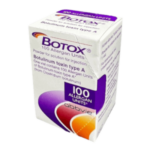
Originating from the United States, Botox is an FDA-approved brand that remains the gold standard in aesthetics when it comes to the diminishment of dynamic fine lines and wrinkles. With over 30 years on the market, Botox (botulinum toxin) injections have built an unmatched reputation for safety and effectiveness. Botox is highly versatile, treating everything from forehead lines and crow’s feet to migraines and hyperhidrosis. The effects of Botox injections usually start to appear within a few days of treatment and last anywhere from three to six months, depending on the individual and the treatment area.
A SIDE FACT:
Botox is a trademark of Allergan and is often used to refer to all brands of botulinum toxin type A. However, the most appropriate term here would be botulinum neurotoxins.
Dysport, an FDA-approved brand from the UK and France, is valued for its fast onset and slightly wider diffusion, making it ideal for larger treatment areas like the forehead or masseter muscles. It works quickly – often within 2-4 days – and has a duration comparable to Botox.
A SIDE FACT:
Dysport injections often show effects within 2-3 days, which is quicker than Botox.
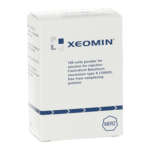
Hailing from Germany, Xeomin is an FDA-approved brand that is unique for its “naked” formulation – it contains no accessory proteins, reducing the risk of antibody formation while blocking nerve signals responsible for muscle movements, as clinical trials show. This makes it a smart choice for many patients who receive frequent and long-term treatments (including both aesthetic and medical procedures). Xeomin has a slightly slower onset than Dysport, still remaining highly effective and safe, as many patients and their healthcare providers claim.
A SIDE FACT:
Xeomin, also known as Bocouture, is distinguished by its pure formulation, which lacks accessory proteins found in other neurotoxins.
One of the most talked-about Korean brands, Nabota offers smooth diffusion, consistent results, and a fast onset, often within 2-4 days. Unlike other above-mentioned FDA-approved neurotoxins, it is a rather new brand that has become popular for both aesthetic and therapeutic applications, offering a more affordable option for practitioners without compromising quality.
Botulax is another high-quality Korean botulinum neurotoxin that’s gaining international attention. Although for now it does not yet have FDA-approved indications, Botulax is known for its predictable diffusion and smooth, subtle results. While addressing the targeted muscles, it excels in delicate areas like the under-eye zone and crow’s feet. Apart from wrinkle reduction and other aesthetic treatments, Botulax is often used to treat a number of medical conditions related to muscle spasms. Its reliability makes it a go-to choice for clinics looking to expand their botulinum neurotoxin offerings.
Innotox stands out for its ultra-pure, highly concentrated formulation, designed specifically for precise cosmetic applications. Its compact packaging is convenient for clinics, and the precision dosing allows for controlled, predictable outcomes. Although not yet having an FDA approval, Innotox is becoming popular among practitioners who value efficiency and high-quality Korean innovation.
“Each brand has its sweet spot,” explains Dr. Sarah Thompson, an aesthetic injector with expertise in multiple neurotoxins. “I use Dysport for large forehead treatments where I want broader diffusion, Xeomin for patients concerned about antibody resistance, and Innotox when I need ultra-precise placement in delicate areas. The key is understanding each product’s personality and matching it to the clinical situation.”
| Brand | Origin | FDA Status | Onset | Duration | Diffusion | Key Feature | Price Point |
|---|---|---|---|---|---|---|---|
| Botox | USA | FDA Approved | 3-7 days | 3-6 months | Moderate | Gold standard; extensive research | Premium |
| Dysport | UK/France | FDA Approved | 2-4 days | 3-6 months | Wide | Fast onset; ideal for large areas | Premium |
| Xeomin | Germany | FDA Approved | 4-7 days | 3-6 months | Precise | “Naked” formulation; low antibody risk | Mid-Premium |
| Nabota | South Korea | Not FDA Approved (yet) | 2-4 days | 3-4 months | Smooth | Natural results; cost-effective | Mid-Range |
| Botulax | South Korea | Not FDA Approved | 3-5 days | 3-4 months | Predictable | Subtle precision; delicate areas | Affordable |
| Innotox | South Korea | Not FDA Approved | 2-4 days | 3-4 months | Precise | Ultra-pure; compact packaging | Mid-Range |
Although all these on- and off-label treatments have the same active ingredient (botulinum toxin), only a healthcare provider during a personalized consultation should define which of them would fit best for each particular patient. Here are some main differences between the treatments:
A SIDE FACT:
All botulinum toxin products have unique formulations that can affect their diffusion, onset, and duration of results.
| Treatment Area/Goal | Best Brand Choices | Rationale |
|---|---|---|
| Forehead Lines (Large Area) | Dysport, Nabota | Wide diffusion covers area efficiently; fast onset |
| Crow’s Feet (Precision) | Xeomin, Botulax, Innotox | Precise placement avoids unwanted spread |
| Glabellar Lines (11s) | Botox, Dysport, Nabota | All effective; choose based on onset preference |
| Masseter (Jaw Slimming) | Dysport, Botox | Larger muscle groups benefit from broader diffusion |
| Under-Eye Area | Botulax, Innotox | Ultra-precise formulations prevent lower lid complications |
| Hyperhidrosis | Botox, Dysport | FDA-approved indications; extensive clinical data |
| Frequent/Long-Term Patients | Xeomin, Innotox | Pure formulations minimize antibody development risk |
| Cost-Conscious Patients | Nabota, Botulax | High quality at more accessible price points |
| Brand-Conscious Patients | Botox | Global recognition and 30+ years of proven safety |
One of the most notable trends in cosmetic dermatology in 2026 is the rise of Korean dermal fillers and botulinum toxins. Nabota, Botulax, Innotox, and many other treatments are redefining the market by offering products that are both cost-effective and highly reliable. Korean brands emphasize smooth diffusion, precision, and purity – qualities that are highly valued by medical professionals.
“The Korean aesthetic philosophy has fundamentally influenced global practice,” notes Dr. Amanda Foster, a cosmetic dermatologist who regularly uses Korean products. “Korean manufacturers prioritize natural, subtle enhancement over the ‘frozen’ look that dominated early botulinum toxin use. This aligns perfectly with modern patient preferences—people want to look refreshed and natural, not obviously treated. Korean brands deliver exactly that aesthetic.”
These brands also reflect the Korean aesthetic philosophy: subtle, natural-looking enhancements with minimal allergic reactions rather than overly rigid or frozen expressions. This approach resonates globally, and more practitioners outside Asia are integrating these products into their clinics to help patients achieve desired results while pursuing their aesthetic goals, such as the creation of a more youthful appearance.
At the same time, Western brands like Botox, Dysport, and Xeomin continue to dominate due to their proven safety profiles and decades of research. For many practitioners, the choice comes down to balancing patient expectations, pricing, and the desired diffusion or onset characteristics of the products that effectively reduce muscle contractions and minimize muscle activity in specific body and facial areas.
A SIDE FACT:
When talking about Korean botulinum neurotoxins, it might be worthy to also mention Jeuveau. While being exceptionally popular nowadays, Jeuveau is a newer neurotoxin that is processed differently than Botox, which may contribute to its performance.
| Aspect | Western Brands (Botox, Dysport, Xeomin) | Korean Brands (Nabota, Botulax, Innotox) |
|---|---|---|
| Market Position | Established leaders; decades of dominance | Rapidly growing; gaining international recognition |
| Regulatory Status | FDA approved; extensive clinical trials | Approved in multiple countries; FDA approval pending for some |
| Clinical Evidence | 30+ years of safety data and research | Growing body of clinical evidence; strong Asian studies |
| Price Point | Premium pricing; higher per-unit cost | Mid-range to affordable; competitive pricing |
| Aesthetic Philosophy | Originally targeted correction; evolved over time | Natural, subtle enhancement from inception |
| Global Recognition | Universal brand awareness among patients | Growing recognition; strong in Asia, expanding globally |
| Innovation Focus | Stability, longevity, medical applications | Purity, precision, natural diffusion, cost-effectiveness |
| Practitioner Appeal | Trust based on legacy and extensive research | Quality-to-cost ratio; modern formulations |
Selecting the right botulinum neurotoxin involves considering several factors:
“Brand selection is a strategic business decision as much as a clinical one,” advises Dr. Robert Williams, a practice management consultant for aesthetic clinics. “Offering both premium Western brands and cost-effective Korean options allows you to serve different patient segments effectively. The patient who insists on Botox by name will pay premium prices, while the value-conscious patient will appreciate quality Korean alternatives.”
The best botulinum toxin is one that balances efficacy, safety, patient preference, and clinic workflow while giving practitioners confidence in predictable outcomes.
No matter which brand you choose, following best practices ensures optimal outcomes:
By combining high-quality products with expert injection techniques, clinics can achieve consistent, natural-looking results that delight patients and keep them coming back.
A SIDE FACT:
Common side effects of botulinum toxin injections include redness, swelling, or bruising at the injection site, which are typically minor and temporary.
All in all, the botulinum neurotoxin market in 2026 offers a wealth of options for medical professionals. Long-standing brands like Botox, Dysport, and Xeomin continue to provide trusted, proven results, while Korean brands such as Nabota, Botulax, and Innotox are rapidly gaining global recognition for their affordability, purity, and smooth, natural outcomes.
“We’re living in the golden age of aesthetic injectables,” concludes Dr. Lisa Anderson, a pioneering aesthetic physician. “Practitioners have more high-quality options than ever before, which means we can truly customize treatments to each patient’s unique needs, preferences, and budget. Whether you choose legacy Western brands or innovative Korean alternatives, the key is understanding each product’s strengths and applying them with skill and artistry.”
All of the brands mentioned here are highly effective and safe, each offering unique benefits that cater to different patient needs and clinic goals. For practitioners seeking high-quality injectables, BeautyDermal is a reliable supplier of all these top botulinum toxins. Whether you favor the legacy of Botox or the precision of Innotox, you can confidently stock your clinic with premium products that meet global standards.
The market is currently led by established Western brands like Botox, Dysport, and Xeomin, alongside rapidly growing Korean neurotoxins such as Nabota, Botulax, and Innotox.
Western brands like Botox and Dysport have decades of proven clinical trust and global recognition. Korean brands are favored for their innovation, high-quality manufacturing, natural-looking results, and cost-effectiveness.
Dysport, Nabota, and Innotox generally have the fastest onset of action, with patients often seeing visible results within 2 to 4 days of treatment.
Xeomin and Innotox are formulated without accessory proteins. This “naked” formulation significantly lowers the risk of a patient developing neutralizing antibodies, making it an excellent choice for individuals requiring frequent or long-term treatments.
No. The potency units of botulinum toxin products are strictly product-specific and cannot be interchanged. Medical professionals must use careful dosing conversions and precise dilution techniques for each specific brand.