0
0 item
View CartYour cart is empty
MON - FRI 10:00 AM - 06:00 PM EST.
SAT - SUN holiday
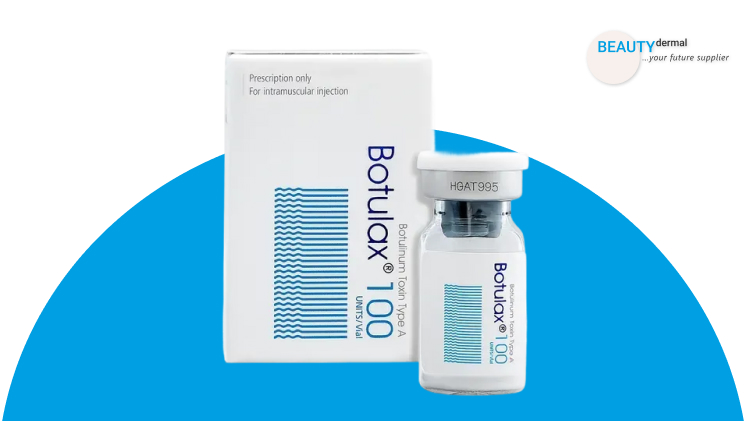
To tailor an effective cosmetic procedure with positive clinical outcomes to meet your patients’ expectations, you must choose products that are safe, high-performing, and within their budget. If the goal is to eliminate dynamic wrinkles and achieve a more youthful appearance, Botulax may be just the right brand. In this blog post, we’ll cover the topic clients are most interested in: what is the Botulax timeline? When will the results become noticeable? How long do they last? How often should touch-up treatments be performed? BeautyDermal ensured that all the essentials were highlighted in this blog post.
You must be a board-certified medical professional to buy Botulax online from trustworthy suppliers, such as BeautyDermal. Ensure your medical license number is valid before placing an order.
Botulax is a South Korean brand of a botulinum neurotoxin type A injection that is widely used for medical and cosmetic treatments. It works by temporarily relaxing the treated muscles to achieve desired outcomes. The effect is longer-lasting than that of traditional botulinum toxin treatments, all because of human serum albumin included in the product’s composition.
Specialists point out these characteristics that define Botulax’s efficiency:
“Botulax offers a highly predictable onset of action, which is vital for both the practitioner’s treatment planning and the patient’s peace of mind. Its stabilization profile provides an excellent diffusion spread, especially beneficial when treating larger areas of dynamic wrinkling.” — Dr. Simon Ourian, Board-Certified Cosmetic Dermatologist
Many clinics pick Botulax as a more affordable alternative to traditional botulinum toxin injections we are more used to, e.g., Botox. If you are a board-certified professional interested in offering Botulax at your practice, check its availability on BeautyDermal.
Now that we are more aware of the basics of medical treatment, let’s discuss the main topic of this article: its timeline. The table below includes all the crucial information, so you can share it with your patients if they want to know what to expect with Botulax.
| Timeline | Physical Response |
| 0-24 hours | Settling period. Patients may notice swelling and redness in the administration spot. Targeted muscles may feel stiffer, but that’s expected and temporary. |
| 3-5 days | The effect reaches its 50% point; patients notice a slight reduction of dynamic wrinkles and smoother skin. |
| 7-10 days | Botulax’s effect fully stabilizes. Patients see visible results after an aesthetic procedure. |
Botulax typically begins to show initial effects within 24 to 72 hours after injection. If two weeks have passed and there are no visible improvements, a follow-up appointment should be scheduled. In very rare cases, the product may be administered incorrectly, the dose may be too small, or the targeted condition may require something stronger than Botulax. That’s why it’s so important to make an appointment with an experienced medical professional to tailor an effective treatment plan according to one’s needs.
As Botulax is used for various therapeutic indications, it is important to highlight the target area before injection to determine how it should be treated. Here are all the essentials specialists should remember:
| Area | First Visible Effect | Peak Effect | Maintenance Requirements |
| Forehead Lines | 1-3 days | 10 days | 5-8 months |
| Crow’s Feet | 2-3 days | 7 days | 4-6 months |
| Jawline | Used with the RF treatment, the results vary | 14 days | 6+ months |
According to the clinical studies, Botulax’s working speed depends on certain factors, and knowing those will help plan a more effective treatment with higher patient satisfaction. Here are the main factors you should take into consideration:
Aftercare is just as important for optimal outcomes as a skilled injection technique and product quality. Instructing patients on all the rules is a crucial step of the pre-treatment consultation, so they understand how to act once at home after the procedure.
Patients should stay upright for at least 3-4 hours after receiving Botulax injections to ensure the product settles properly and does not drift. For the first few days after treatment, it is advisable to stick to mild skincare products and avoid those with acids or retinol to prevent irritation. You may create a list of recommended safe products, so they have them at home after the procedure.
After Botulax injections, patients should avoid rubbing or massaging the treated area for at least 24 hours to prevent the product from moving to unintended areas. Patients should also apply sunscreen daily after Botulax injections, as freshly treated skin is more sensitive to UV rays, which can accelerate the breakdown of results. Applying a cold compress to the injection site may also help with redness and swelling; just ensure it’s not too cold, wrapped in a clean cloth, and is not pressed too hard to the area.
“The success of any neurotoxin treatment is a partnership between the injector’s technique and the patient’s adherence to aftercare. Premature manipulation of the injection site or elevated core body temperature within the first 24 hours can significantly alter the clinical outcome and delay the timeline.” — Dr. Ava Shamban, Clinical Professor of Dermatology
It is recommended to avoid strenuous exercise for 24 hours post-injection, as increased blood flow can spread the Botulax and affect results. Alcohol and blood-thinning medications should be avoided because they may worsen the bruising. Heat and sunshine are not friends for at least 48 hours after the injection, so hot tubs, solariums, and sunbathing are forbidden for that time. Specialists also recommend skipping facials and dentist appointments, and try to control dramatic expressions to let the product settle well in the target area.
By the third day, approximately 74.5% of patients see visible improvement from Botulax treatments. Patients with faster metabolisms may notice Botulax results appearing earlier, but may also find they wear off quicker. Depending on the area, the results may last from 5 months to a year, so the need for a follow-up treatment should be calculated based on the patient’s body peculiarities. Generally, specialists recommend having a maintenance treatment every 6 months, but the need for them lessens the longer Botulax is used in one’s routine.
Both Nabota and Botulax are effective for reducing wrinkles, but Nabota is often noted for its higher purity, which may reduce the risk of antibody formation over long-term use compared to Botulax. Nabota contains approximately 754 ± 11 pg of toxin per 100 U vial, while Botulax contains about 844 ± 43 pg of toxin per 100 U vial, indicating a difference in potency between the two products. The onset of action for Botulax is slower compared to Nabota, which typically shows results within 2 to 3 days.
| Feature | Botulax | Nabota |
|---|---|---|
| Onset of Action | 3-5 days (Peaks at 7-10 days) | 2-3 days (Faster initial onset) |
| Expected Duration | 4-6 months | 3-5 months |
| Toxin Content (per 100 U) | 844 ± 43 pg | 754 ± 11 pg |
| Primary Advantage | Smooth, even diffusion across large areas | High purity profile, rapid results |
Nabota and Botulax generally provide similar temporary cosmetic results, with effects typically lasting 3 to 6 months depending on dosage, treatment area, and individual metabolism. Nabota is often perceived to last around 3 to 4 months, and in some cases up to 5 months, due to its concentrated formulation. Botulax is known for its smooth, even diffusion and may last around 4 to 6 months. Choosing between Nabota and Botulax depends on one’s individual needs, treatment goals, potential risk factors, and guidance from a qualified, certified practitioner.
Botulax, marketed as Ketybo in the US, is an FDA-approved botulinum toxin type A product since February 2024. It is approved for the treatment of moderate-to-severe glabellar lines, as well as some other aging signs. We recommend discussing the procedure with a specialist beforehand to ensure the product is safe for your aesthetic goals.
Within 2 to 4 hours after the cosmetic treatment, patients may experience mild swelling and redness at the injection site, which typically subsides by hour 12. Aftercare is crucial at this stage, as it significantly reduces unpleasant adverse effects.
The first 24 hours are critical for the solution to settle and start acting. Patients may notice the beginning of muscle relaxation within the first day. However, the full effect is not visible until the end of week one or two (depending on personal peculiarities), so patients should be prepared for the waiting period.
Botulax is typically used for a wide range of cosmetic and therapeutic purposes. Mainly, specialists choose it for wrinkle reduction (dynamic lines) and treatment of excessive sweating, but it may also be suitable for other muscle spasm-related conditions (migraines, TJM, etc.).
Common side effects of Botulax include mild swelling, bruising, and redness at the injection site, which typically resolve within a few days. Some patients may experience temporary headaches or slight muscle weakness near the treated area after receiving Botulax injections. Rare but serious side effects from Botulax can include allergic reactions, difficulty swallowing, or severe muscle weakness, and patients should consult their healthcare provider if they experience concerning symptoms.