0
0 item
View CartYour cart is empty
MON - FRI 10:00 AM - 06:00 PM EST.
SAT - SUN holiday
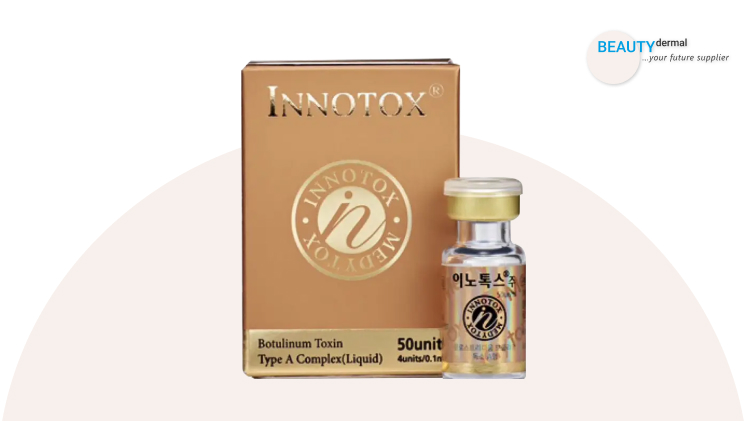
Innotox has become an increasingly popular option in the world of aesthetic medicine thanks to its convenience, effectiveness, and innovative liquid formulation. Comparing Innotox to many botulinum toxin type A products, it is worth mentioning that it works by temporarily relaxing targeted muscles that contribute to expression lines and dynamic wrinkles. However, the onset of visible results is not immediate. While some individuals notice changes within just a few days, full effects generally develop gradually over the course of one to two weeks. So, how long does it take for Innotox to start working and what factors contribute to this time frame? Let us check that out right away!
WORTH KNOWING:
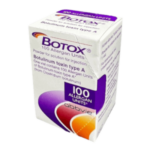
Since traditional Botox (produced by AbbVie) is probably the most popular botulinum toxin, it might be useful to shortly talk about the main differences between Innotox and Botox. Firstly, unlike Botox, Innotox is a ready-to-use liquid formulation that eliminates the need for reconstitution, while Botox is supplied as a freeze-dried powder that requires dilution with saline before use, which can introduce inconsistencies in concentration. The liquid formulation of Innotox allows for smoother diffusion, which can lead to more even results in areas requiring precision, while Botox’s diffusion radius is more controlled, making it suitable for targeted applications in smaller areas. Secondly, Innotox does not contain human serum albumin or animal-derived ingredients, using a synthetic stabilizer instead, which may reduce the risk of allergic reactions compared to Botox, which contains human serum albumin and sodium chloride. Thirdly, Innotox maintains its stability at room temperature, making it easier to handle and store, while Botox requires refrigeration to maintain its potency, which can complicate logistics in clinical settings.
Innotox is a botulinum toxin type A injectable developed for cosmetic and therapeutic applications. It is commonly used to reduce the appearance of dynamic facial wrinkles such as:
Unlike many traditional botulinum toxin products that require reconstitution before use, Innotox comes in a ready-to-use liquid form. This feature is probably one of the key differences when running Innotox vs. Botox comparison – while Botox requires reconstitution, Innotox doesn’t. It simplifies preparation and may improve dosing consistency for healthcare providers.
The active ingredient in Innotox works similarly to other neuromodulators by temporarily blocking nerve signals to specific muscles. As muscle activity decreases, the overlying skin appears smoother and less wrinkled.
WORTH KNOWING:
When looking for an answer to the question “Is Innotox FDA-approved?”, it is necessary to mention that Innotox is a relatively new injectable on the aesthetic market of the U.S., so it has not received an FDA approval yet. At the same time, however, it has a very high-quality composition, just like many other botulinum toxin injections such as Botox, Dysport, Xeomin, etc. and has been approved by the Korean Ministry of Food and Drug Safety.
Facial expressions such as smiling, squinting, and frowning repeatedly contract underlying muscles. Over time, these repetitive movements contribute to the development of dynamic wrinkles. Innotox interrupts communication between nerves and muscles by inhibiting the release of acetylcholine, a neurotransmitter responsible for muscle contraction. Once injected into targeted muscles, the treatment gradually reduces muscle movement. As the muscles relax:
However, the process does not happen instantly. The neurotoxin needs time to bind to nerve endings and interfere with signal transmission.
WORTH KNOWING:
Innotox is most effective for dynamic wrinkles caused by repetitive muscle movement. However, very deep static wrinkles (such as severe glabellar/frown lines) that remain visible even at rest do not belong to cosmetic and therapeutic indications of the product and may respond less dramatically to it. In such cases, healthcare providers may recommend not only to relax facial muscles but also to nurture the skin through combining Innotox with additional cosmetic treatments such as dermal fillers, skin resurfacing, microneedling, chemical peels, and collagen-stimulating procedures. Combination therapy can often produce more comprehensive facial rejuvenation results.
As extensive clinical studies show, most patients begin noticing the early effects of the Innotox treatment within 2 to 5 days after treatment. Initial improvements may include:
The speed of onset varies depending on several individual and treatment-related factors. Some patients respond very quickly, while others require more time before visible changes appear. In many cases, subtle improvements continue developing gradually over the first week.
Although early effects can appear within a few days after injecting Innotox (namely, a significant smoothing of wrinkles and fine lines is usually observed by days 4 to 7), the full aesthetic effect is typically achieved around 10 to 14 days post-injection. By this stage:
Healthcare providers often recommend waiting at least two weeks before evaluating final treatment outcomes or considering touch-up injections. Patients who become concerned after only a few days may simply need additional time for the product to reach its peak effect.
WORTH KNOWING:
On average, the effects of Innotox generally last between 3 to 6 months. More precisely, the duration of effects for Innotox typically lasts 4-6 months, and in some patients, it can extend up to 8 months, whereas Botox generally lasts 3-4 months.
The timeline for visible results can vary considerably from one person to another. Several important factors influence how quickly Innotox takes effect:
Most patients do not experience dramatic sensations after trained professionals inject Innotox into their bodies. However, some subtle feelings may occur as the neurotoxin begins affecting muscle activity. Possible sensations include:
These sensations are usually temporary and not considered harmful. Patients generally do not feel the exact moment the product “kicks in.” Instead, they gradually notice smoother movement and reduced wrinkling over several days.
Some users and practitioners report that Innotox may produce consistent results and relatively rapid onset compared to certain traditional botulinum toxin formulations. However, individual experiences vary considerably, and scientific comparisons remain limited. Because Innotox is supplied as a ready-to-use liquid rather than a freeze-dried powder requiring reconstitution, some believe the formulation may contribute to faster diffusion or quicker action. Still, onset speed depends on many variables beyond the product itself, including injection technique, patient physiology, treatment area, and dose selection. Overall, most botulinum toxins follow a similar general timeline:
Proper aftercare may help achieve desired outcomes (such as overall facial rejuvenation) and reduce the risk of unwanted side effects. Patients are commonly advised to avoid the following for several hours after treatment:
Healthcare providers may provide additional individualized post-treatment instructions depending on the injection site and treatment goals.
In some cases patients may experience delayed or weaker-than-expected results. Potential reasons that might decrease patient satisfaction include:
Sometimes patients expect dramatic changes immediately after treatment and mistakenly assume the procedure failed when effects are simply still developing. Waiting the full 14 days before assessing results is generally recommended.
As treatment begins taking effect, patients may observe:
The goal of modern aesthetic neuromodulator treatment is often natural-looking rejuvenation rather than a completely frozen appearance. Experienced injectors aim to preserve balanced facial expression while reducing excessive muscle activity.
At the same time, a patient might experience several side effects during the onset period of Innotox. Luckily, most of them are mild and temporary, resolving within a few days. They may include:
More serious complications are uncommon when injections are performed by qualified professionals, but improper placement may increase risks such as:
Choosing an experienced and properly trained injector is critical for both safety and treatment quality.
As clinical trials show, most patients repeat treatment every 3 to 4 months to maintain results. Over time, some individuals notice that regularly treated muscles become less active, potentially extending intervals between sessions. However, excessive or overly frequent injections should be avoided. Treatment schedules should always be guided by a qualified medical professional.
Patients can improve their overall treatment experience by following several practical recommendations:
Innotox typically begins working within 2 to 5 days after injection, with full results becoming visible after approximately 7 to 14 days. The treatment temporarily relaxes targeted muscles, helping soften dynamic wrinkles and create a smoother, more refreshed appearance. While onset speed varies depending on individual factors such as metabolism, dosage, muscle strength, and injection technique, most patients can expect gradual and natural-looking improvements during the first two weeks following treatment. Proper administration by an experienced healthcare professional and adherence to aftercare recommendations are essential for achieving optimal outcomes.
Certified healthcare providers may order both Innotox and a wide selection of other medical and cosmetic injectables on advantageous terms at BeautyDermal.
Innotox typically displays an operational onset within 2 to 3 days following muscular placement, whereas classic freeze-dried options like Botox often require 4 to 7 days to exhibit initial relaxation. Both neuromodulators require a full 14 days to stabilize into their final, balanced cosmetic appearance.
The structural binding process of botulinum toxin type A to your cell receptors depends completely on internal anatomy and cannot be sped up artificially. However, making gentle, natural facial expressions for the first hour after your injection can assist in distributed cellular mapping. Avoid rubbing or massaging the face, as this can displace the liquid.
Asymmetry is completely normal across the opening week. Left and right muscle pairs, local micro-circulation, and local tissue mass absorb the liquid formulation at slightly different speeds. Clinical correction parameters or touch-ups should only be analyzed after 14 full days have passed.
If zero muscle relaxation or wrinkle softening occurs after two full weeks, you should return to your medical administrator. They will evaluate your expression mapping to see if your local metabolism requires a denser structural unit adjustment, or if your facial anatomy presents deep static wrinkles that require additional therapies like dermal fillers or micro-needling.