0
0 item
View CartYour cart is empty
MON - FRI 10:00 AM - 06:00 PM EST.
SAT - SUN holiday

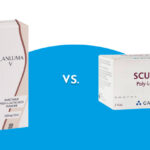
Choosing the right collagen-stimulating injectable can make a significant difference in achieving natural-looking, long-lasting aesthetic results. Among the popular options, Lanluma and Sculptra stand out for their ability to restore volume, improve skin firmness, and enhance facial or body contours through collagen stimulation. Although both treatments contain poly-L-lactic acid (PLLA), they differ in their formulations, common applications, and treatment approaches.
This Lanluma vs. Sculptra comparison explores their key characteristics, mechanisms of action, treatment areas, results, and longevity to help patients and aesthetic professionals understand which option may be better suited to specific cosmetic goals.
Unlike traditional dermal fillers that provide immediate volume, collagen-stimulating injectables deliver gradual improvements by encouraging natural collagen production. While some HA fillers can be dissolved with hyaluronidase, biostimulators do not offer the same straightforward reversal options.
Lanluma and Sculptra are both poly-L-lactic acid (PLLA)-based treatments that stimulate collagen formation to improve skin firmness, volume, and contour over time. Rather than simply filling tissue, they trigger a controlled response that promotes collagen remodeling.
Although often called fillers, Lanluma and Sculptra are primarily collagen biostimulators, meaning their results develop progressively rather than immediately. Understanding this distinction helps healthcare professionals set realistic expectations for patients.
Note:
Whichever collagen stimulator you choose, buy it only from a trustworthy supplier of genuine, traceable stock. BeautyDermal does not currently stock Sculptra or Lanluma, but licensed practitioners can source other biostimulators, such as Radiesse and Ellansé, through our catalogue.
When comparing Lanluma vs. Sculptra, understanding their key characteristics is essential for identifying the most suitable treatment for different aesthetic goals. Although both are poly-L-lactic acid (PLLA)-based collagen stimulators, they differ in their formulations, treatment applications, and recommended protocols. Examining their composition, mechanism of action, treatment areas, onset of results, and longevity provides a clearer picture of how each injectable works and what patients can expect.
| Feature | Sculptra | Lanluma V | Lanluma X |
|---|---|---|---|
| Manufacturer | Galderma | Sinclair | Sinclair |
| PLLA per vial | 150 mg | 210 mg | 630 mg |
| Other ingredients | Sodium carboxymethylcellulose and mannitol | ||
| Regulatory status | FDA-approved (nasolabial folds, cheek wrinkles); CE-marked | CE-marked, not FDA-approved | CE-marked, not FDA-approved |
| Main use | Facial volume loss and wrinkles | Face and smaller body areas | Large body areas such as buttocks and thighs |
| Longest published follow-up | Up to 25 months (nasolabial folds) | 9 months in the post-market study, 25-month analysis planned | |
When comparing Lanluma vs Sculptra, both injectable treatments share the same primary ingredient: poly-L-lactic acid (PLLA), a biodegradable, biocompatible polymer that stimulates natural collagen production. However, they differ in their PLLA concentrations per vial, available formulations, and intended treatment applications.
Both Lanluma and Sculptra are collagen-stimulating injectables containing poly-L-lactic acid (PLLA). Unlike traditional fillers that provide immediate volume, they encourage the body’s natural collagen production, gradually improving skin firmness, volume, and texture.
One of the key differences between the brands is how each one is used to improve facial and body contours. Both are collagen-stimulating injectables designed to gradually restore volume and enhance skin firmness, but their applications vary depending on the treatment area and aesthetic goals.
This product is primarily used for facial rejuvenation, helping restore lost volume and create smoother, more youthful-looking contours. Common treatment areas include:
Lanluma offers greater versatility for body contouring with formulations designed for different treatment areas. It is commonly used for:
Body indications carry their own anatomy-specific risks. A review from the Icahn School of Medicine at Mount Sinai on PLLA gluteal augmentation warns: “Physicians must understand gluteal anatomy and avoid injecting deeply in the danger triangle to prevent intravascular injection into the gluteal vessels or injury to the sciatic nerve” (Lin, Dubin and Khorasani, Dermatologic Surgery, 2020). The FDA also lists increasing the size of the buttocks among dermal filler uses it has not approved.
One important thing to understand when choosing either of the two products is that neither of them delivers instant results. Both injectables stimulate the body’s natural collagen production, so improvements develop gradually over several weeks and months. However, the timeline can vary depending on the treatment area, individual collagen response, and number of sessions required.
With this product, the results develop progressively, with noticeable improvements in volume, skin firmness, and body contour appearing as collagen production increases. The typical timeline includes:
This injectable also provides gradual, natural-looking improvements, particularly for individuals seeking facial volume restoration or subtle contour enhancement. Its results generally follow this timeline:
The longevity of the results is an important factor to consider when comparing the two. Both collagen-stimulating injectables offer long-lasting improvements in volume, firmness, and skin texture. However, the duration of their effects can vary depending on the treatment area, individual collagen production, lifestyle, and number of sessions completed.
Note:
Both treatments often involve 2-3 initial sessions, although the exact number depends on individual needs and aesthetic goals. While many choose Lanluma for larger areas like the buttocks and thighs, Sculptra remains a well-established option for facial volume restoration.
This product achieves optimal results, making it a popular choice for patients seeking gradual facial rejuvenation and volume restoration. Its longevity depends on several factors:
That figure comes from a randomised, evaluator-blinded study of 233 patients comparing PLLA with collagen: “Injectable PLLA provides well-tolerated, effective, and long-lasting (up to 25 months) nasolabial fold wrinkle correction” (Narins et al., Journal of the American Academy of Dermatology, 2010).
This brand is designed to provide long-lasting volume enhancement, particularly for larger body areas where gradual collagen stimulation helps improve shape and definition, providing a long-term rejuvenation effect. Its results typically include:
Because both products are made of PLLA microparticles, they share the same main risks. The most common reactions after Sculptra are injection-site swelling, tenderness, redness, pain, bruising, bleeding, itching and lumps, and it should not be used in people with a history of keloids or hypertrophic scarring. Papules and nodules are the complication practitioners watch most closely with any PLLA product, and careful reconstitution, deep placement and post-treatment massage are the usual ways of lowering that risk.
Sinclair’s own post-market study of Lanluma in 70 participants reported the same pattern: “Lumps (neck, upper arm, hand) and nodules (neck, hand, thigh) were the most frequent adverse events (AEs) reported by investigators” (Amselem et al., Journal of Cosmetic Dermatology, 2024). None of the events was serious, severe or fatal.
The short answer is yes, both Sculptra and Lanluma can be effective for overall facial rejuvenation, as they stimulate natural collagen production to gradually restore lost volume, improve skin firmness, and enhance facial contours. Unlike traditional fillers, their results develop progressively, creating subtle, natural-looking improvements.
Sculptra is particularly well-established for addressing age-related facial volume loss, especially in the cheeks and temples, while Lanluma V can also support facial contouring and collagen regeneration in the body. However, neither treatment addresses every sign of ageing, such as pigmentation changes or dynamic wrinkles.
Choosing between Lanluma and Sculptra depends on individual aesthetic goals, treatment areas, and desired results. While Sculptra is widely used for facial rejuvenation and gradual volume restoration, Lanluma is often preferred for body contouring, particularly for enhancing the buttocks, smoothing hip dips, and improving thigh contours.
Both treatments stimulate natural collagen production, offering gradual, long-lasting improvements rather than immediate volume enhancement. However, their suitability varies depending on the patient’s needs and the available clinical evidence.
If you are a licensed practitioner building a collagen-stimulation offer, explore the biostimulators and dermal fillers available at BeautyDermal.
Both are poly-L-lactic acid collagen stimulators with the same excipients, but they differ in dose and focus. Sculptra holds 150 mg of PLLA per vial and is FDA-approved for facial wrinkles. Lanluma comes as Lanluma V (210 mg) for the face and smaller areas and Lanluma X (630 mg) for large body areas such as the buttocks and thighs, and it is CE-marked rather than FDA-approved.
No. Lanluma is a CE-marked medical device made by Sinclair and is marketed in Europe and the UK, not the United States. Sculptra is FDA-approved for nasolabial fold contour deficiencies and, since 2023, for fine lines and wrinkles in the cheeks. Body uses such as buttock augmentation are not FDA-approved indications for any dermal filler.
Sculptra has the longer track record: a randomised trial in the Journal of the American Academy of Dermatology measured nasolabial fold correction up to 25 months after the last session. Lanluma is expected to last a similar time, around two years, but its published post-market data so far cover 9 months, with a 25-month analysis planned. Maintenance sessions are commonly used for both.
Sculptra is sometimes injected into the buttocks off-label, while Lanluma X is designed and dosed for large body areas. Gluteal injection needs detailed anatomical knowledge: reviews warn against deep injection in the so-called danger triangle because of the gluteal vessels and the sciatic nerve. Larger areas also need far more product, which affects cost and the number of vials per session.
The usual short-term effects are swelling, tenderness, redness, bruising, itching and pain at the injection site. The complication specific to PLLA is papules or nodules, which can appear weeks or months later. In Sinclair’s post-market study of Lanluma, lumps and nodules were the most frequent adverse events, and none was serious. People prone to keloids or hypertrophic scarring should not receive PLLA.