0
0 item
View CartYour cart is empty
MON - FRI 10:00 AM - 06:00 PM EST.
SAT - SUN holiday
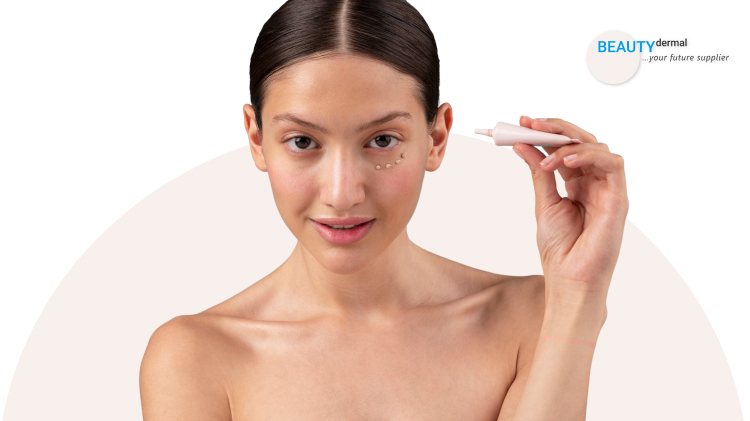
The periorbital region is the one where age-related aesthetic concerns develop first due to the skin in the said-above region. There are multiple reasons that may cause the under-eye to look tired and puffy, from fluid retention to muscle spasming, and so treatment options vary depending on the cause: surgical or non-surgical options, long-lasting or with a shorter effect — the list goes on and on.
One of the most popular procedures is a botulinum toxin treatment. Even though it’s mainly associated with another cosmetic treatment on the periorbital zone — crow’s feet elimination — the product can also be administered in the lower eyelid area by an advanced-training expert to decrease puffiness in that area. The treatment is also known as ‘Jelly Roll Botox’. In today’s article, we will explain the procedure’s basics, point out the best candidates for the treatment, and answer the most common questions regarding the treatment. Perfect for both specialists and their curious patients!
Before reaching the ‘Botox’ part of the explanation, we would like to point out the definition of the ‘jelly roll’. Jelly roll is the small, soft bulge that appears right under the lower lash line when facial muscles are active in that area, so when we smile or squint. It’s caused by the natural contraction of circular muscle, which surrounds the eye and helps with important processes, such as blinking.
Mainly, patients consider this treatment because jelly rolls can make eyes appear puffy or tired, especially when the muscle activity is excessive. Jelly roll Botox targets the orbicularis oculi muscle to achieve one’s aesthetic goals. The treatment is entirely elective — it is chosen for aesthetic reasons rather than for any medical need.
A jelly roll is the bulge of skin and muscle beneath the lower eyelashes; they occur when the person is smiling or squinting. As follows, we may understand that they are caused by the orbicularis oculi muscle contraction during such facial movements.
The under-eye bags, unlike jelly rolls, are present constantly. They are mainly caused because thin skin gets affected by the aging process, fluid retention, or fat pads that develop under the skin. This distinction matters clinically, because only the first of the two responds to a neuromodulator:
| Feature | Jelly roll | Under-eye bag |
|---|---|---|
| When visible | Only on smiling or squinting | Constantly, at rest |
| Underlying cause | Contraction of the pretarsal orbicularis oculi | Skin laxity, fluid retention, herniated fat pads |
| Responds to botulinum toxin | Yes — the muscle is the source | No — the cause is not muscular |
| Usual alternatives | — | Dermal fillers, skin-tightening, blepharoplasty |
Jelly roll Botox involves injecting a neuromodulator just beneath the lash line. Specialists use micro-doses of botulinum toxin to relax the area and give it a more rested appearance: Botox blocks nerve signals to prevent the muscle from tightening during smiling. The procedure is extremely delicate, which is why perfect knowledge of the human anatomy from a specialist is obligatory. In the published dose-finding work, injections were placed roughly 3 mm below the ciliary margin.
Specialists take fresh Botox vials purchased from a reliable supplier to provide a safe experience. The injections themselves take only 5 to 10 minutes, though the full appointment with assessment and aftercare advice is usually under half an hour. Most patients experience minor adverse effects typical for any cosmetic injections, such as localized skin reactions: swelling, redness, and bruising. The improvement becomes noticeable within 3 to 7 days after a session.
During treatment, a small amount of Botox is carefully injected into the lower portion of the orbicularis oculi muscle. By gently relaxing this muscle, the treatment can reduce the prominence of the under-eye roll while preserving a natural, expressive smile. The results develop rather fast, benefiting patients with various needs.
The lower eyelid is one of the few areas where a higher dose does not simply mean a better result. A dose-finding study in Dermatologic Surgery compared 4 and 8 units per side and measured both the aesthetic effect and the side effects:
| Dose per lower eyelid | Eye-widening at rest | Eye-widening at full smile | Bothersome side effects |
|---|---|---|---|
| 4 units | 1.8 mm | 2.6 mm | Not reported as bothersome |
| 8 units | 2.2 mm | 2.9 mm | 8 of 8 subjects (eyelid edema, incomplete sphincter function) |
“Although increasing doses of BTX-A increases eye widening, unattractive results and side effects are seen at higher doses. The authors recommend that lower 2- or 4-U doses of BTX-A be used in the lower eyelid.” — Flynn et al., Dermatologic Surgery (2003), lower-eyelid dose-finding study
If a spasmed muscle is the main concern, candidates should seek subtle smoothing without fillers or surgery. Ideally, the perfect candidate would be someone who is:
Jelly roll Botox is not a viable option for those who have true fat pads under the eyes, as well as hollowness. For under-eye hollows, dermal fillers would work best to even out the facial surface, while more severe concerns would probably be corrected by more invasive cosmetic procedures. A consultation with a qualified specialist must be conducted to tailor an optimal treatment formula to achieve desired aesthetic results.
“BOTOX can be used in the lower eyelid to improve wrinkles and widen the eye.” — Flynn et al., Dermatologic Surgery (2003). Note that treatment directly beneath the lower lash line is an off-label use of the product in the United States.
Jelly roll Botox injections become increasingly popular, and here’s why:
Because the lower eyelid is treated with only a few units rather than the larger amounts used on the glabella or forehead, the effect here tends to fade sooner than the three to four months usually quoted for standard cosmetic dosing. In practice most patients plan on roughly two to three months, and the exact figure varies with dose, muscle strength, and individual metabolism.
Flynn, T. C., Carruthers, J. A., Carruthers, J. A., & Clark, R. E. (2003). Botulinum A toxin (BOTOX) in the lower eyelid: dose-finding study. Dermatologic Surgery, 29(9), 943-950. https://pubmed.ncbi.nlm.nih.gov/12930337/
U.S. Food and Drug Administration. (2021). BOTOX / BOTOX Cosmetic (onabotulinumtoxinA) for injection: Full Prescribing Information. Silver Spring, MD: Center for Drug Evaluation and Research. https://www.accessdata.fda.gov/drugsatfda_docs/label/2021/103000s5320lbl.pdf
Nigam, P. K., & Nigam, A. (2023). Botulinum Toxin. Treasure Island, FL: StatPearls Publishing. https://www.ncbi.nlm.nih.gov/books/NBK557387/
Lin, S., & Tiwari, V. (2023). Anatomy, Head and Neck: Orbicularis Oculi Muscle. Treasure Island, FL: StatPearls Publishing. https://www.ncbi.nlm.nih.gov/books/NBK441907/
Because only a few units are placed in the lower eyelid, the effect fades sooner than the three to four months usually quoted for standard cosmetic dosing. Most patients plan on roughly two to three months. Longevity depends on the dose used, muscle strength, and individual metabolism, so it varies from patient to patient.
The under-eye area is delicate and treatment directly beneath the lash line is off-label in the United States, so it demands practised and experienced handling. Botulinum toxin is long established around the eye for dynamic lines such as crow’s feet, and the decisive factor is that the injection is performed by a qualified medical professional. If the bulging is caused by overactive muscle movement, jelly roll Botox is a reasonable option.
Improper injection technique can lead to a stiff smile or eyelid sagging. Common effects include temporary eyelid drooping and muscle weakness, plus local reactions such as redness, swelling and increased sensitivity. In the published dose-finding study every subject who received 8 units per side reported bothersome effects, including eyelid oedema and incomplete sphincter function — which is why conservative dosing matters here. Reactions are temporary and typically fade within a few days to a week.
Ideal candidates have under-eye bulging that appears when they smile. It is important to confirm that the bulging is caused by muscle contraction, because fat deposits and age-related hollowness produce a bulge that is present at rest and will not respond to a neuromodulator. If either of those is the cause, other treatment options should be considered.
The treatment area is small, so very little product is required. Published dose-finding work recommends 2 to 4 units per lower eyelid, and found that raising the dose to 8 units per side increased side effects in every subject without a proportionate gain in effect. Specialists prefer starting low and adding more if needed.